Calder
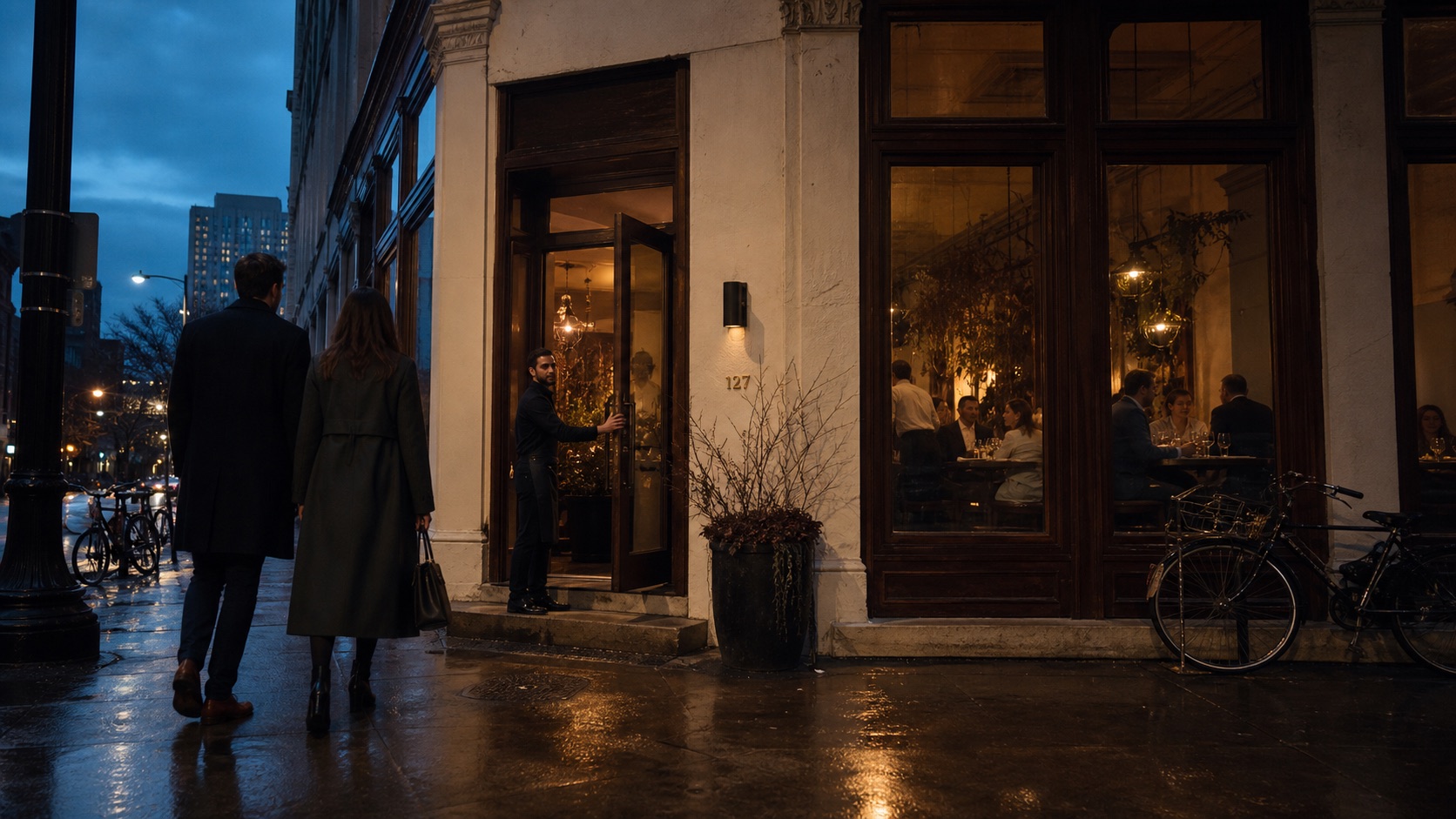
Rain on Superior Street. Light in the windows. The first table is already ordering.
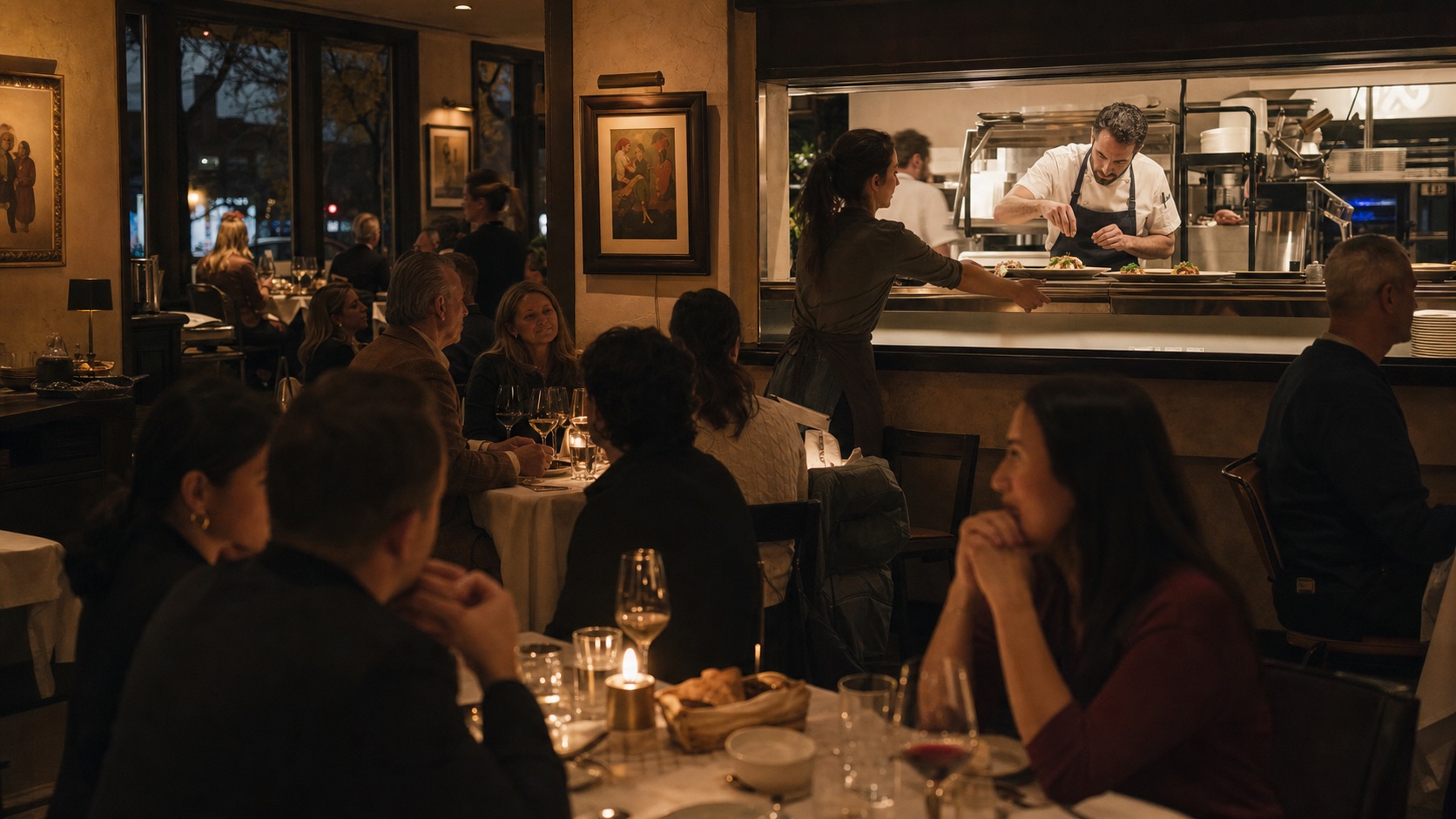
The room finds its rhythm.
The pass is moving. Someone has ordered another bottle. At the bar, two walk-ins decide to stay for dinner.
Seats held nightly
Conversation encouraged
Order what sounds good. That is the system.
The list changes in small ways every day. The cooking follows the Midwest through the season without turning dinner into a lecture.
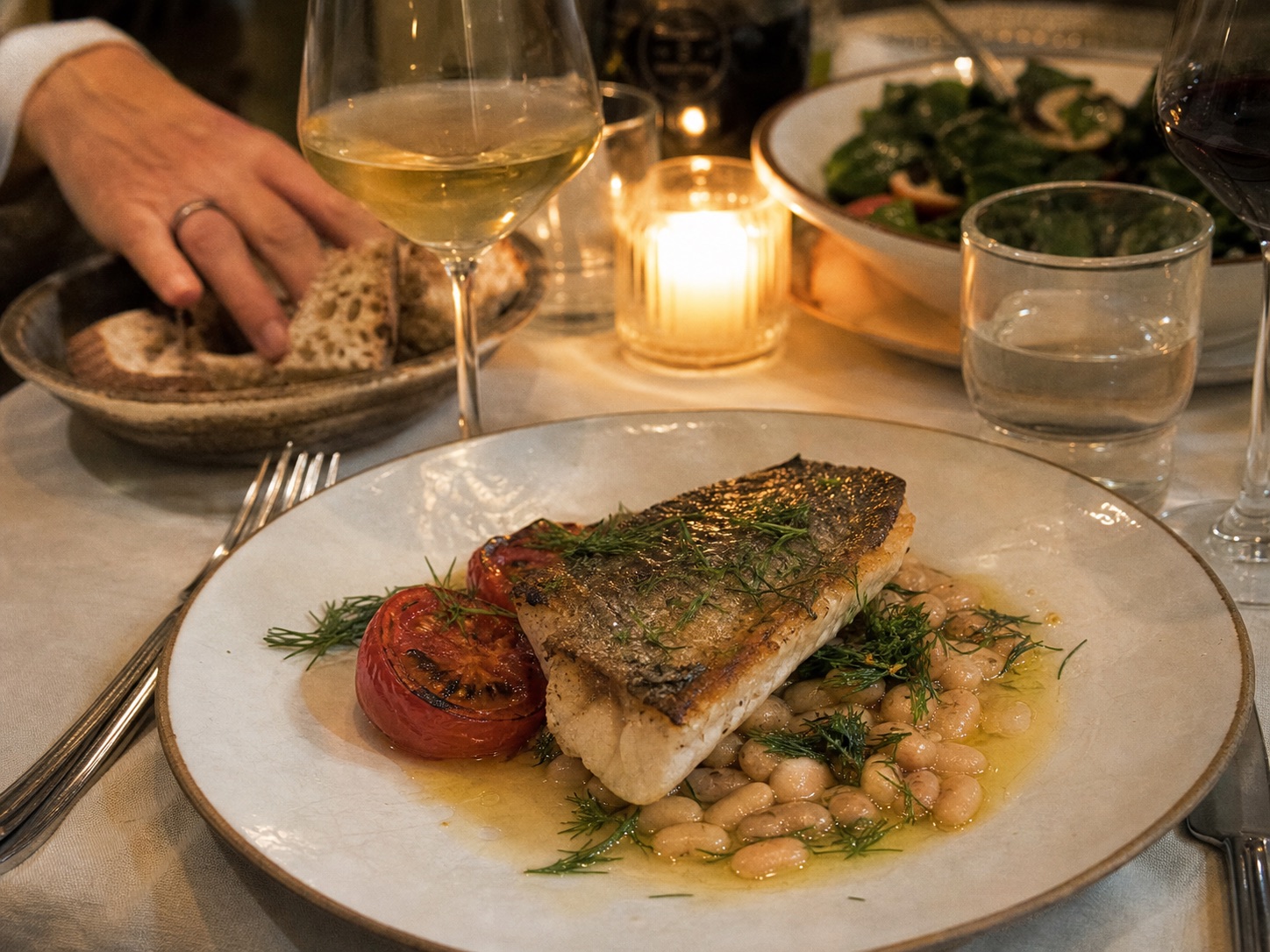
Cooked for the table. Not the photograph.
Crisp skin, warm beans, tomatoes taken almost too far, dill, and enough butter to bring it together.
“A good restaurant disappears around the people using it.”
Calder’s fictional story begins in 1998 with twelve tables, a walnut bar, and a kitchen too small for its ambition.
The room changed slowly: an open pass, restored windows, local artwork, chairs replaced one at a time. It feels established because it was allowed to accumulate a life.
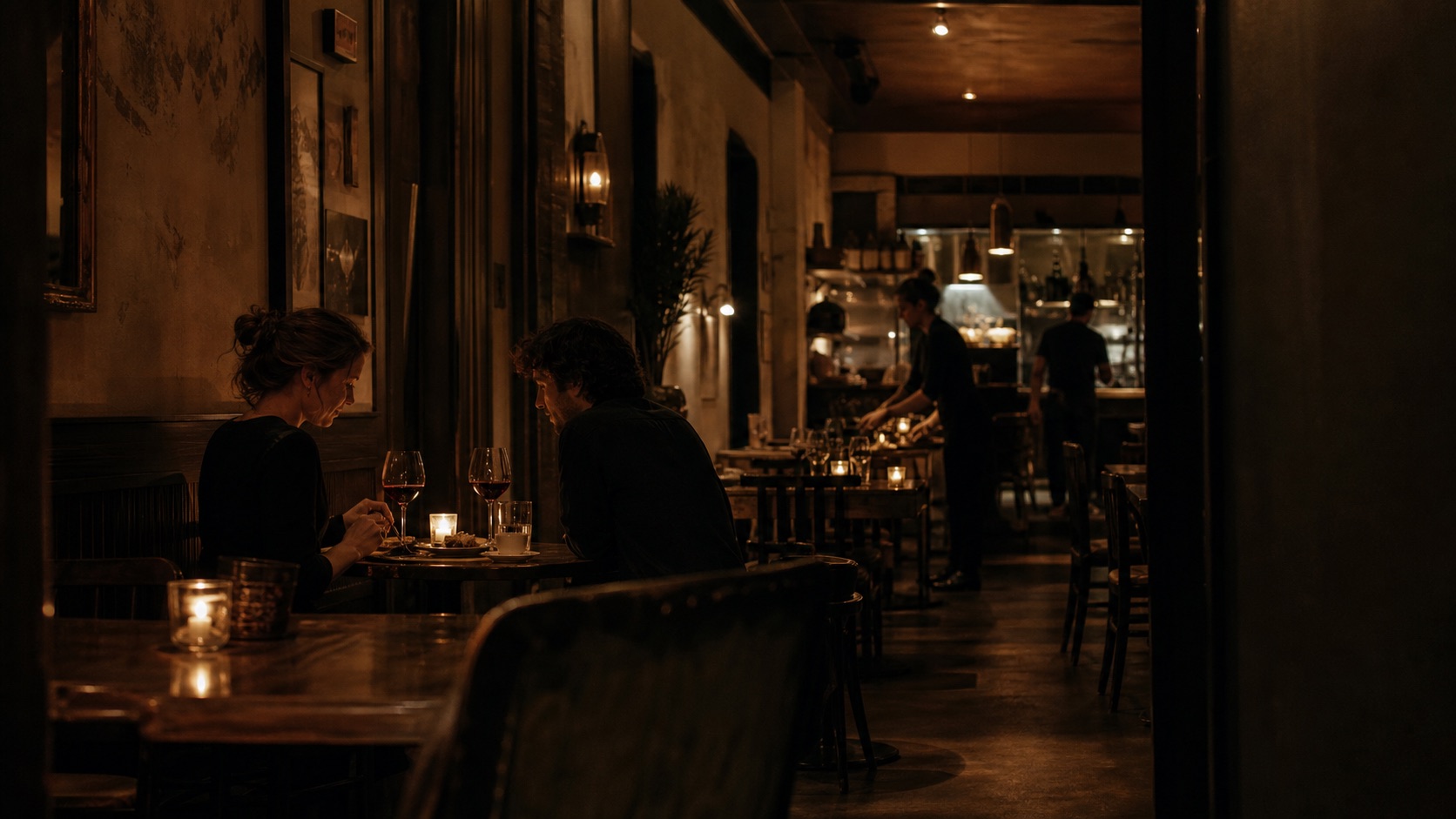
No one is hurrying you out.
Coffee, half a glass of wine, the last piece of cake. The kitchen is nearly dark. The evening ends when the conversation does.
Friday–Saturday · 5–11
There is a table with your name on it.
Chicago, Illinois
After 2 p.m.
room, and restroom